



EMDR (Eye Movement Desensitisation and Reprocessing Therapy)
MDR is a psychological therapy which has found widespread acceptance by mental health clinicians. The National Institute for Health and Clinical Excellence (NICE) and the World Health Organisation (WHO) recognise it as a treatment for post-traumatic stress disorder (PTSD). Bodies of research have demonstrated its ability to treat other mental health conditions e.g., borderline personality disorder (Brown et al, 2006); generalised anxiety disorder (Gauvreau et al, 2008); panic disorder (Goldstein et al, 2000; Fernandez et al, 2007); phobias (De Jongh et al, 1999; De Jongh et al, 2002); performance anxiety (Barker et al, 2007); low self-esteem (Soberman et al, 2002) and migraine headaches (Marcus, 2008).
EMDR theory posits that psychopathology is due to the maladaptive or incomplete processing of traumatic life events. Shapiro (2001), the founder of EMDR, describes it as an imbalance in the nervous system where the information processing system is unable to function at an optimal level. This results in the original traumatic material (sounds, images, physical sensations) being held in the original distressed, excited state which can be triggered by external and internal stimuli and expressed in the form of intrusive thoughts, nightmares, and flashbacks.
Central to the practice of EMDR is the use of dual or bi-lateral stimulation (eye movements bi-lateral taps or buzzers). This is thought to activate the information processing system allowing processing to take place.
EMDR is an effective psychological therapy to treat many conditions.
(Summary extracted from Dr. Reid’s doctoral thesis)
Schema Therapy
Schema therapy is an integrative 3rd wave therapy that targets schemas, a term used clinically to describe maladaptive patterns of thinking that could cause someone to engage in unhealthy behaviour, or to struggle to maintain adult relationships. Schemas are thought to develop during childhood, particularly in children whose emotional and physical needs weren’t met; they may also develop in children who were overindulged or whose parents did not maintain proper boundaries. In adulthood, these schemas are thought to influence an individual’s thoughts and actions in negative ways—leading to behaviours such as avoidance, overcompensation, or excessive self-sacrifice. These behaviours, in turn, can negatively affect relationships and emotional well-being.
The aim of schema therapy is to help the individual recognize their behaviour, understand the underlying cause(s), and change their thoughts and behaviours so that they’re better able to cope with relationship challenges or emotions in healthy, productive ways. Schema therapy combines elements of cognitive behavioral therapy (CBT), psychoanalysis, Gestalt therapy, and related approaches. Schema therapy can be effective in treating a wide range of mental health conditions, such as personality disorders.
(Summary extracted from Psychology Today, 2022)
Cognitive Behaviour Therapy (CBT)
Cognitive behavioural therapy (CBT) is a talking therapy that can help you manage your problems by changing the way you think and behave.
It’s most commonly used to treat anxiety and depression, but can be useful for other mental and physical health problems.
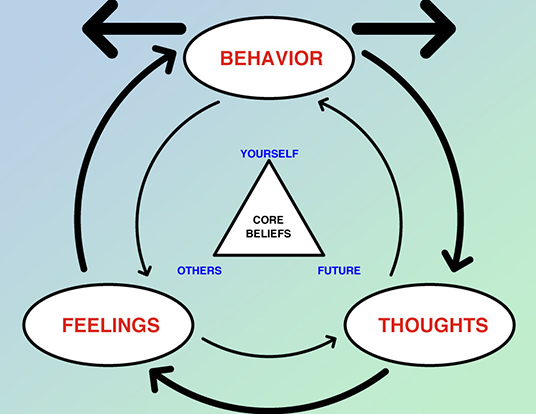
CBT is based on the concept that your thoughts, feelings, physical sensations and actions are interconnected, and that negative thoughts and feelings can trap you in a vicious cycle.
CBT aims to help you deal with overwhelming problems in a more positive way by breaking them down into smaller parts.
You’re shown how to change these negative patterns to improve the way you feel.
Unlike some other talking treatments, CBT deals with your current problems, rather than focusing on issues from your past.
It looks for practical ways to improve your state of mind daily.
CBT has been shown to be an effective way of treating a number of different mental health conditions.
In addition to depression or anxiety disorders, CBT can also help people with:
• bipolar disorder
• borderline personality disorder
• eating disorders – such as anorexia and bulimia
• obsessive compulsive disorder (OCD)
• panic disorder
• phobias
• post-traumatic stress disorder (PTSD)
• psychosis
• schizophrenia
• sleep problems – such as insomnia
• problems related to alcohol misuse
CBT is also sometimes used to treat people with long-term health conditions, such as:
• irritable bowel syndrome (IBS)
• chronic fatigue syndrome (CFS)
• fibromyalgia
Although CBT cannot cure the physical symptoms of these conditions, it can help people cope better with their symptoms.
The course of treatment usually lasts for between 5 and 20 sessions, with each session lasting 50 minutes.
During the sessions, you’ll work with your therapist to break down your problems into their separate parts, such as your thoughts, physical feelings and actions.
You and your therapist will analyse these areas to work out if they’re unrealistic or unhelpful, and to determine the effect they have on each other and on you.
Your therapist will then be able to help you work out how to change unhelpful thoughts and behaviours.
After working out what you can change, your therapist will ask you to practise these changes in your daily life and you’ll discuss how you got on during the next session.
The eventual aim of therapy is to teach you to apply the skills you have learnt during treatment to your daily life.
This should help you manage your problems and stop them having a negative impact on your life, even after your course of treatment finishes”.
(Summary extracted from NHS website, 2022)

Psychodynamic Psychotherapy
Psychodynamic therapy focuses on unconscious processes as they are manifested in the client’s present behaviour. The goals of psychodynamic therapy are client self-awareness and understanding of the influence of the past on present behaviour. In its brief form, a psychodynamic approach enables the client to examine unresolved conflicts and symptoms that arise from past dysfunctional relationships and manifest themselves in a variety of clinical symptoms.
Several different approaches to brief psychodynamic psychotherapy have evolved from psychoanalytic theory and have been clinically applied to a wide range of psychological disorders. A growing body of research supports the efficacy of these approaches.
Psychodynamic therapy is the oldest of the modern therapies. As such, it is based in a highly developed and multifaceted theory of human development and interaction.
(National Library of Medicine, 2022)

Emotion-Focused Therapy (EFT)
Emotion Focused Therapy (EFT) is a well-known humanistic approach to psychotherapy formulated in the 1980s and developed in tandem with the science of adult attachment, a profound developmental theory of personality and intimate relationships. This science has expanded our understanding of individual dysfunction and health as well as the nature of love relationships and family bonds. Attachment views human beings as innately relational, social and wired for intimate bonding with others. The EFT model prioritizes emotion and emotional regulation as the key organizing agents in individual experience and key relationship interactions.
EFT is best known as a cutting edge, tested and proven couple intervention, but it is also used to address individual depression, anxiety and post-traumatic stress and to repair family bonds.
(Summary extracted from ICEEFT website, 2022)